Stromness Museum has received two grants from AIM to work with the conservator Hana Bristow to rehouse and preserve their seaweed collection, part of which is now on display.
Stromness Museum holds a collection of 400 specimens of pressed seaweed collected between 1839 and 1962 by several key Orcadian naturalists. These specimens are a vital source of information for science and are an important historical record and archive as they are used by researchers to help understand the effects of climate change.
Thanks to an AIM Pilgrim Trust Remedial Conservation Grant, the museum was able to see through to completion the conservation and remounting of the final group of seaweed specimens requiring conservation, which were collected in 1929-30 by the Orcadian naturalist George Ellison. We are delighted that this work now ensures the longevity of the collection and improves future access for researchers, outreach activities, exhibitions, and digitisation work.
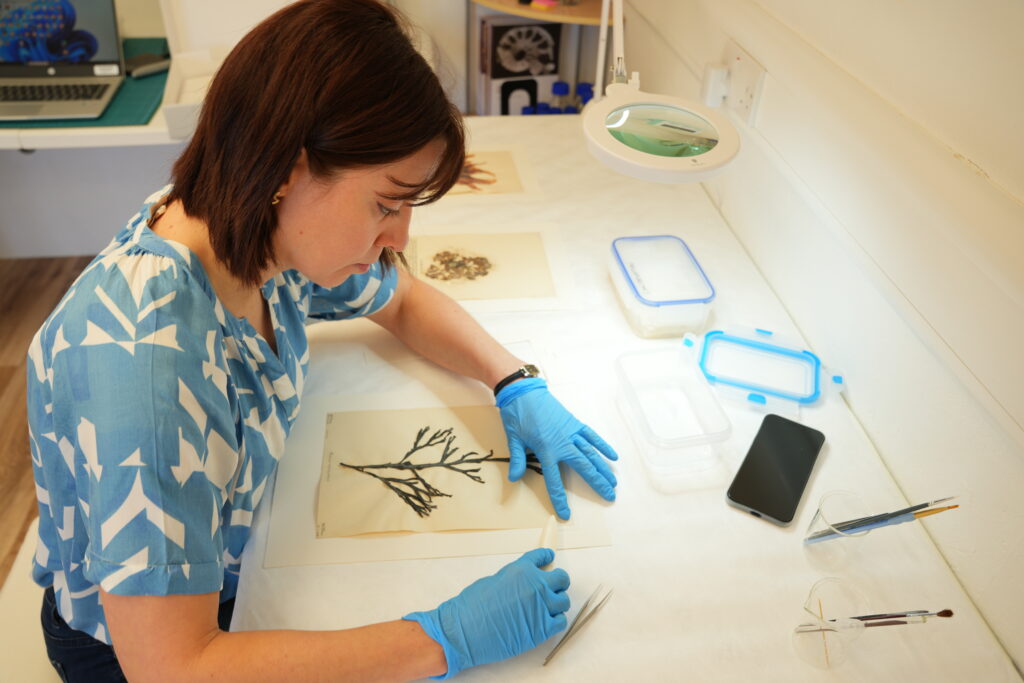
It was valuable to work with the same conservator, Hana Bristow, who has previously worked on other seaweed specimens as part of the first AIM grant. Due to the established working relationship, less time was spent on liaising back and forth and this made the process quicker and smoother. At the time of the project, Hana was on the pathway to becoming ICON accredited. This grant normally only funds accredited conservators to undertake remedial work unless there are exceptional circumstances. This was one of those cases, as Hana had the relevant experience and was specialising in natural history; she had also recently relocated to Orkney.
Specimens now have new acid-free handling mounts with clear labelling, protected inside polypropylene herbarium sleeves. Twelve specimens required some form of interventive treatment to stabilise their condition, which often included re-adhering lifting parts, unfurling crumpled areas to regain their original form via humidification, or creating fragment packets to safely store detached parts of specimens.
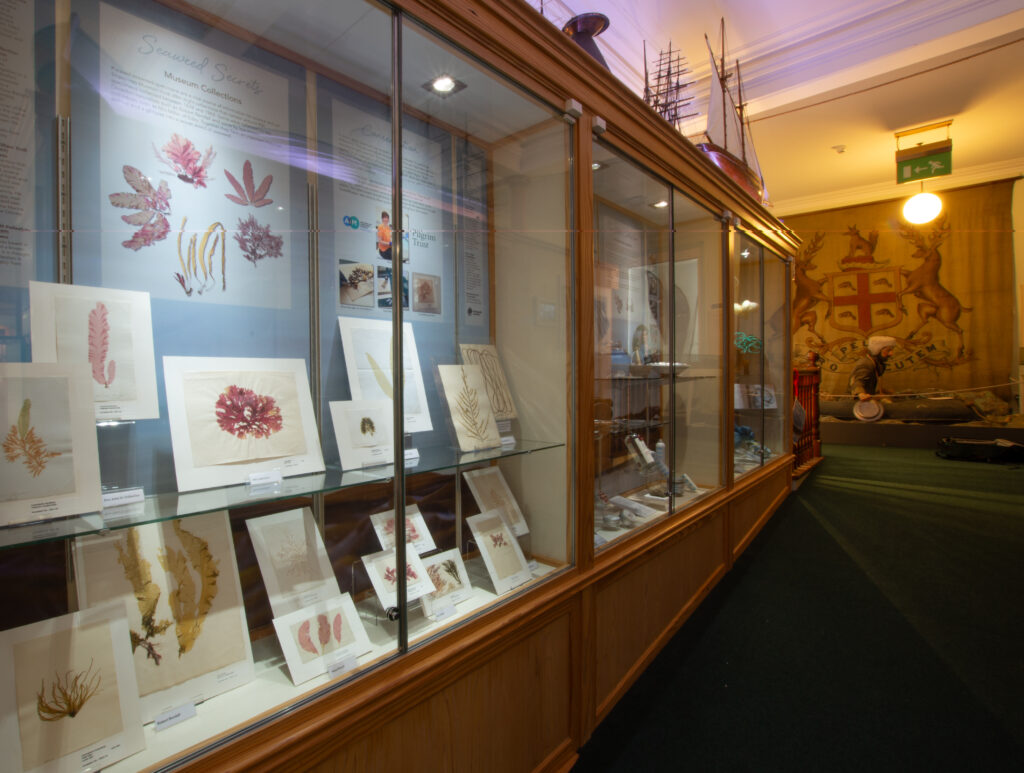
“I now feel an immense sense of pride when I look at the seaweeds, rather than overwhelming despair!”
Janette Park, Honorary Curator, Stromness Museum