Sarah Duthie, Director of External Affairs, London Museum and AIM Trustee on making AI work for you.
I did a search today on the AIM and Museums Association websites for ‘AI’. Both came back with ‘No results found.’ However, according to a report by the University of Reading in 2023, almost a quarter of museums were using Artificial Intelligence then, and there is work happening in the sector now to provide more support. So, if you haven’t dipped your digital toe into the AI waters yet, there is more coming to answer your questions and build your confidence.
For museums with limited resources, it might be hard to know where to start. In this article I’ve made a few suggestions that you might like to consider with your colleagues and Boards. The chances are you are using AI already, whether you have an app on your phone or do a search on Google and take note of the ‘AI Overview’ that comes up instantly on the results page.
Some key drivers for museum use of AI are to support their work in collections management and to benefit the visitor experience and there are some great case studies out there to inspire. One that I particularly like is at The Palace of Versailles, where you can have a conversation with a statue in their gardens.
Here at London Museum, we’ve introduced a conversational search tool powered by AI on our website. It helps digital visitors explore our collections by answering questions about objects and stories and suggesting further areas of exploration. Our ambition is to open access to our collections and help visitors find objects they may never have thought of searching for. So, how can smaller museums take advantage of AI to improve the visitor experience?
Ethical considerations
Before you start, there are some ethical considerations you might want to think about. For example, be transparent with your visitors about when you have used AI, and think about how greater use of AI, and your choice of provider, might work with your environmental sustainability goals.
If you haven’t worked with AI before it could be worth picking a pilot project like auto-generating alt text (describes images for visually impaired users) for a subset of your collection’s objects. Start with just 10-50 objects to build your confidence.
If you are just starting out, think about beginning with non-sensitive content from your collection and be careful to avoid personal data, confidential records and anything that might constitute an intellectual property (IP) risk. Start by choosing a simple cloud hosted service and set up an account. You could try drafting social media posts, image captions and newsletter copy using short prompts. For example, “write a lively two-sentence caption about our 1920s tea set”.
Try using AI to develop different versions of object information text to suit what your different audiences need, for example, headlines for quick readers plus a deeper explanation for those who want detail. You could even ask AI to check existing object descriptions to make sure what you are providing isn’t too dense.
For automated transcription of oral histories, consider, with appropriate permissions, running interviews through an automatic speech-to-text tool, and follow up with a human quality review. You’ll get searchable text to index and quote. And what about developing multilingual copy? You could ask AI to do some translation for you.
To bring objects to life for online content, AI can help uncover angles – social history, personal stories, connections to wider events – to inspire engaging mini-narratives. or generate short “Did you know?” side notes to sprinkle through displays based on your existing trusted copy as the source.
Check the outputs
Whatever you choose to do, always make sure you check the results; Nothing beats human intelligence for fact checking, accurate language and ensuring your tone of voice is consistent. Keep your staff and volunteers in the loop and ask them to keep feeding back to ensure your quality control.
It’s also a good idea to keep versions and provenance. Record when AI was used and what edits were made, and keep the originals. This is good for transparency and future-proofing. Processing your work in batches means that errors are more visible and manageable. And keep raw files and AI outputs separately so you can possibly reprocess with better tech later.
Watch out for the new tool, Goose, in 2026. It uses AI to trawl a large pool of professional data and resources to support marketers within museum and heritage organisations across the UK with expertise from across the sector. This work is being developed by the Arts Marketing Association (AMA) and the National Lottery Heritage Fund (NLHF).
Honesty builds trust
A final point on being clear with your visitors and users: if any of your content is AI-generated, label it – honesty builds trust. And I’m sure you have already guessed this, but approximately 50% of this article was researched with support from AI. I’ve changed the tone to make it consistent and I’ve fact checked it with some colleagues.
Because after all, museums are ultimately a very human experience.
AMA example AI policy
In 2024 Arts Marketing Association brought together an AI Sector Support Group to look at AI from a governance level. The intention of the group was to help organisations develop considered guidelines so that AI use is employed effectively.
Their work led to the development of a helpful example AI policy that covers a range of questions and considerations for teams looking to explore their use of AI. Whilst the policy is drafted at a governance level, it provides a useful starting point for those considering their approach to AI and who may wish to adapt it to fit their own specific context.
As well as Arts Marketing Association and Target Internet, the group included AIM; Black Lives in Music; Clore Leadership; Family Arts Campaign; Future Arts Centres; Independent Theatre Council; Jocelyn Burnham (aiforculture); Kids in Museums; Museums Association; Music Mark; One Dance UK; OutdoorArtsUK; The Audience Agency; The Space;
UK Theatre.
Other news

Temporary reduced rate of VAT – flash survey results
Read a summary of our latest flash survey findings on the temporary reduced rate of VAT for children’s meals, tickets and family attractions.
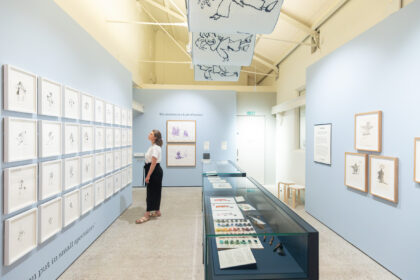
Quentin Blake Centre for Illustration now open
The Quentin Blake Centre for Illustration is now open, the world’s largest space dedicated to illustration.

SORP 2026: new rules, new shared responsibility
Charity Finance Group’s Policy and Communications Team explains why the most significant update to charity financial reporting in years is not just a job for your finance team.