In the latest of our series of features looking at different ways in to the ‘Fragile to Flourishing’ research, Steve Gardam shares his initial reaction.
When AIM asked me to offer a view on the new ‘Fragile to Flourishing’ (F2F) resources, I was very conscious that to get the most from them, you need to read them for yourself.
This article highlights what I personally found most memorable, offered as another way in.
For me, it is the case studies that stand out: real stories of real museum people on their own path from fragile to flourishing. I appreciate the honesty: “The case studies capture a moment in time; each is part of an unfurling story.”
Amongst a wealth of sound evidence and advice, the critical thread throughout the case studies is a quality of attitude, of mindset: that it remains possible to make positive change happen, over time.
Positive mindset is not about ‘Pollyanna thinking,’ disregarding the difficult and only focusing on nice things. It is about the powerful concept expressed by the writer Margaret Atwood: “You may not be able to alter reality, but you can alter your attitude towards it, and this, paradoxically, alters reality. Try it and see.”
Amongst the case studies, the Bowes Museum is trying to see the furthest ahead in time: to imagine itself, and its purpose, in 2092. The Bowes is at pains to acknowledge it is not yet fully ‘flourishing,’ and they know the future is unpredictable. But they can see where they are today – especially in terms of processes, and technology – and act where that feels lacking for the long term. The Bowes mindset is to get to grips with what can be tackled right now – within their 2092 frame – working towards ‘thriving in the future’.
All the F2F case studies highlight a crucial point: addressing issues in the present, including developing long-term strategy, needs resourcing:
- The Bowes Museum has a 2-year Resilient Heritage NLHF grant supporting its long-term thinking, helping risk-taking feel a bit less risky.
- Another case study museum, the Lightbox in Woking, received emergency NLHF funding and UK Shared Prosperity funding ‘to explore how best to rebalance its portfolio of business models’ (what we might also call income streams).
- The Towner in Eastbourne does not report receiving similar targeted support, but its case study notes that ‘specific investment funds in business model development would be embraced.’
Achieving funding to support transformation can be a real struggle for any organisation, and especially AIM’s smallest members. But no commercial business progresses without investment, and neither can museums. Investing more time does often need more money, but other case studies show the importance of targeting the time and effort you already have. Again, mindset is key. The Cartoon Museum keeps a clear-eyed focus on the strongest areas for income generation, avoiding scattershot activity. At the Mary Rose: when a promising idea hits a speedbump, rather than abandon the idea, they ask, “How else can we do it?”
The F2F research talks about ‘transforming’ business models. I translate this as achieving a better balance of income from diverse sources, in which public funding – seen as investment – remains just as valid a part of the mix as other fundraised or earned income.
The Scottish Maritime Museum (SMM) case study reports how, back in 2006, the Scottish Executive identified that SMM would be unsustainable without adequate public funding. This was put in place and remains essential. Core funding is at 62% today (down from 72% in 2014), now with almost 40% income generated via admissions, commercial profit, and fundraising: real progress in rebalancing income streams. This is linked to ‘infectious energy and effort’ in partnership building and increasing relevance for today’s SMM audiences.
AIM members are characterised by a can-do attitude, so my emphasising this common thread of mindset might feel like preaching to the choir.
However, when things do feel fragile – the utility bill has gone up, the roof is leaking, there is an HR issue but no HR support – it is hard to maintain focus, optimism, and the confidence to act for the long-term. The F2F team and the case study museums provide heartening examples of organisations that, even in uncertainty, are changing their perception of reality, to see what happens.
Steve Gardam
Click here to view Steve Gardam's LinkedIn profile (opens in a new tab)Other news

Temporary reduced rate of VAT – flash survey results
Read a summary of our latest flash survey findings on the temporary reduced rate of VAT for children’s meals, tickets and family attractions.
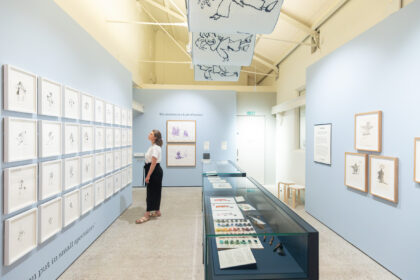
Quentin Blake Centre for Illustration now open
The Quentin Blake Centre for Illustration is now open, the world’s largest space dedicated to illustration.

SORP 2026: new rules, new shared responsibility
Charity Finance Group’s Policy and Communications Team explains why the most significant update to charity financial reporting in years is not just a job for your finance team.